Before You Download a Personal Finance App India Offers, Check These Privacy Basics
Introduction
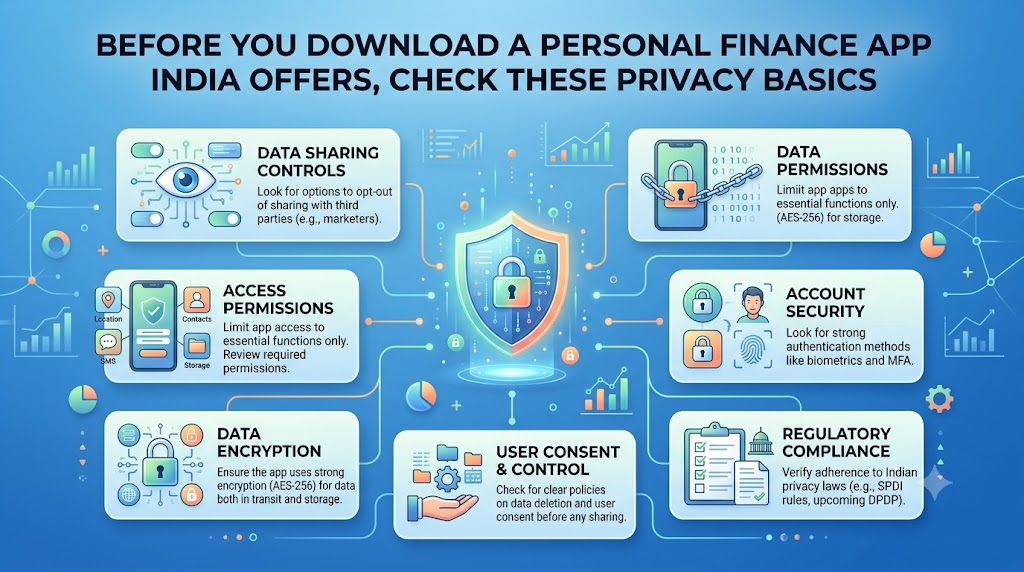
Money apps know a lot about you. They may see what you buy, where you shop, and when you get paid. That is useful for planning. It is also sensitive. A careless app can leak details or sell them to others. So the first question is not about features. It is about trust. Before you pick any personal finance app India offers, learn what to check. This guide covers permissions, data rules, and safe habits in simple words. It also shows how an expense tracker India routine can work with little data sharing. MoneyVoid is a privacy-focused personal and business finance platform that is being developed. It aims to help individuals, families, founders, and finance teams see where money goes.
What Does Money App Privacy Mean?
Privacy means you control who sees your money details. It covers what an app collects, how long it keeps the data, and who else can read it. Think of a diary. You would not hand it to a stranger. Money data is just as personal. Some apps ask only for what you type in. Others ask to read messages, contacts, or bank links. Each extra permission widens the door. Good privacy means the app asks for the least it needs. It also explains why in plain words and lets you leave with your data deleted.
Why This Matters for Your Money
A leak of money data can cause real harm. Scammers can use your spending habits to sound believable. A caller who knows your bank or your usual shops seems more real. Your salary day, your rent, and your loans all reveal patterns. Data can also be used to push products you do not need. Families share devices, so one weak app may expose several people. Small business owners face extra risk, because company and personal data may mix. Careful choices now save stress later. A few minutes of checking can prevent months of trouble.
Personal Finance App India: Permissions to Question
Start with the permission screen. A personal finance app India users install should explain each request. Be wary of access to contacts, photos, or call logs. A money tool rarely needs them. Message access is a tricky one. Some apps read bank texts to log spends. That may be handy, but it also exposes other messages. Ask whether you can use the app without it. Then read the data policy. Look for how long data stays and whether it is shared with partners. Check how to delete your account. If any answer is hidden or vague, treat that as a warning and move on.
Expense Tracker India: Tracking With Less Data
An expense tracker India users keep does not need to see your bank. You can type each spend or import a simple file. Manual entry takes a few minutes a day. It also keeps your accounts private. File imports are a middle path. You download a statement, then load it into the tool yourself. Nothing is linked live. Whichever route you pick, label each item with a clear group. Review the groups weekly. MoneyVoid.com plans a Money Leak Analyzer to sort expenses, spot unusually high spending, and give monthly summaries. Early versions are planned around manual entry and CSV imports, so banking passwords are not needed. It is still in development.
Subscription Tracker India: Listing Plans Without Oversharing
A subscription tracker India households use only needs a few facts. Write the plan name, price, billing day, and owner. You do not need card numbers or passwords. Keep those out of any list. If you use an app, check that it lets you add plans by hand. Ask whether it shares your plan list with advertisers. Plan lists reveal your interests, and some firms value that. A private sheet is a fine option too. Whatever you choose, review it monthly. MoneyVoid.com plans a Subscription and Recurring Tracker for renewal reminders and views of unused services. It is a planned idea, and it promises no savings.
Recurring Payment Tracker: Mandates and Permissions
Auto-debit permissions are a privacy matter too. A mandate lets a company pull money from your account again and again. A recurring payment tracker lists each one with its limit and date. Review the list for items you do not know. Old mandates stay active until someone ends them. Cancel unwanted ones through the provider or your bank. Also check which apps hold your payment details. Remove saved cards from services you no longer use. Fewer saved details mean fewer leaks if a service is ever breached. Do this review each quarter.
Budget Planner App India: Plans Without Linking Accounts
A budget planner app India offers can work well without bank links. You enter your income and fixed costs. You set limits for groups like food and travel. Then you log spends as they happen. The app compares your plan with your entries. Because you control the inputs, you control the exposure. Some tools offer an optional link for convenience. Treat that as a choice, not a need. If you do link, read what is shared and how to unlink later. Keep your phone locked with a strong code. A good plan is only as safe as the device that holds it.
Understanding Your Financial Health Score
A financial health score rates spending, debt, savings, and emergency funds. To build one, a tool needs details about all four. That makes privacy even more important. Ask what is stored behind the score. An emergency fund is money kept for sudden needs. Some people prefer to enter rough ranges instead of exact figures. That can still give a useful view. Remember that a score is only a guide. It cannot see your full life. MoneyVoid.com plans a Money Void Score, a financial health score based on spending, debt, savings, emergency funds, and risk. It is still being built.
UPI Fraud Prevention Starts With Your Data
Scammers work better when they know more about you. Good UPI fraud prevention therefore includes data care. Do not post screenshots of payments online. They can show your name, your bank, and your payee. Be careful with apps that ask for access to your messages, since OTP texts live there. An OTP is a one-time code sent to confirm a payment. Never share it with anyone. Phishing is a fake message that tries to steal details. If a caller seems to know too much, still hang up and call the official number. If fraud happens, contact your bank and official helplines. This is general safety advice, not legal advice.
Startup Burn Rate Calculator: Sharing Company Numbers Safely
Company numbers are sensitive too. A startup burn rate calculator needs payroll, rent, tool bills, and income. Think about who sees those figures. A shared sheet can be a risk if links are open to anyone. Restrict access to named people. Remove old staff from shared files. Burn rate is the cash a startup spends each month, and rivals or scammers may find it useful. Use clear labels, but avoid putting bank details in the same file. MoneyVoid.com plans a Startup Burn Optimizer to model payroll, cloud costs, SaaS subscriptions, and marketing costs. It is a planned tool, not a live one.
Startup Runway Calculator: Handling Cash Forecasts With Care
Runway is the number of months cash can last. A startup runway calculator combines your cash balance with your burn. That makes it a sensitive file. Treat it like a financial statement. Share it only with people who need it, such as partners or advisors. Keep a dated copy for each month, and store copies in one safe place. Do not email it widely. If you share it with an investor, mark which version is current. Also test cautious cases privately before you present them. Good data habits build trust with the people you work with.
SaaS Spend Management: Tools Hold Your Data Too
SaaS means software you rent online. Each tool your team uses holds some company data. SaaS spend management is not only about price. It is also about knowing where your data lives. Keep a list of every tool, its owner, and what data it holds. Remove tools you no longer use, and close those accounts fully. A seat is one paid user slot. Remove seats for people who left, so old logins cannot be misused. Ask each owner to review access levels each quarter. Fewer tools mean fewer places where something can go wrong.
Table: Money Tools at a Glance
| Tool Type | What It Does | Who It Helps |
|---|---|---|
| Personal finance app India | Brings money details into one view | Individuals and families |
| Expense tracker India | Records spends with manual or file entry | Privacy-minded households |
| Subscription tracker India | Lists plans without card details | Families and students |
| Recurring payment tracker | Shows active mandates and limits | Anyone with auto-debits |
| Budget planner app India | Compares plans with entered spends | Salaried people |
| Financial health score | Gives a general habit check-up | Anyone seeking a snapshot |
| UPI fraud prevention | Protects data and payments from scams | All phone payers |
| Startup burn rate calculator | Shows monthly cash use from company data | Founders |
| Startup runway calculator | Shows months of cash left | Founders and advisors |
| SaaS spend management | Tracks tools, seats, and the data they hold | Small teams |
Common Mistakes People Make With Money
- Tapping Allow on every prompt. Read each permission before you agree.
- Giving banking passwords to unknown tools. A safe personal finance app India never needs them.
- Skipping the data policy. It tells you who sees your details.
- Linking accounts for convenience only. An expense tracker India routine works fine with manual entry.
- Posting payment screenshots. UPI fraud prevention includes guarding your details.
- Leaving old mandates active. A recurring payment tracker helps you end them.
- Storing plan lists with card numbers. A subscription tracker India sheet needs only names, prices, and dates.
- Sharing company sheets openly. A startup burn rate calculator file and a startup runway calculator file should go only to named people.
- Forgetting old tool accounts. SaaS spend management includes closing them.
- Overtrusting a number. A financial health score and a budget planner app India plan are guides, not proof.
A Simple Example
This is a fictional example. A teacher wants an app to plan her monthly money. She tests two tools. The first asks for contacts, messages, and photos. The second asks for nothing but the numbers she types. She reads the data policy of each. The second explains deletion clearly. So she picks it, enters her income and fixed bills, and logs spends by hand. She also removes saved cards from old shopping apps. No amounts are shown, because every case differs. A platform like MoneyVoid, which is still in development, aims to support this kind of private, manual approach through categories and summaries.
How MoneyVoid Can Help
MoneyVoid is a privacy-focused personal and business finance platform that is being developed. It aims to help people and teams find needless spending and lower money risk. A Money Leak Analyzer is planned for expense tracker India tasks, built around manual entry and CSV imports. A Subscription and Recurring Tracker is planned to serve as a subscription tracker India and a recurring payment tracker. A Scam and Fraud Shield is planned for UPI fraud prevention awareness. A Money Void Score is planned as a financial health score. A Startup Burn Optimizer is planned as a startup burn rate calculator and a startup runway calculator, with support for SaaS spend management. Together, these ideas aim to shape a personal finance app India and budget planner app India experience that respects privacy. All of it is in progress, and none is released.
Frequently Asked Questions About Money App Privacy
- What should I check first in a personal finance app India offers?
Check the permission requests. Ask why each one is needed. Then read the data policy for storage time and sharing. Confirm that you can delete your account. If the app wants contacts or photos without a clear reason, choose another tool. - Can an expense tracker India work without linking my bank?
Yes. You can enter spends by hand or import a statement file. This keeps your accounts private. It takes a little more effort, but many people find the habit useful. Weekly entries keep records fresh and easy to review. - What details does a subscription tracker India really need?
Only the plan name, price, billing day, owner, and purpose. Skip card numbers and passwords. Those do not belong in a list. A short, plain record is enough to spot idle plans and plan your reminders. - How do I find old mandates with a recurring payment tracker?
List every auto-debit you can find in bank records and app settings. Note the payee and the limit. Anything you do not know needs a closer look. End unwanted ones through the provider or your bank. Review the list each quarter. - Is a budget planner app India safe without bank links?
It can be safer, because you control every input. Enter income, fixed costs, and limits yourself. Log spends as they happen. Use a strong phone lock. If an app offers a link, read what it shares before you agree. - How private is a financial health score?
That depends on the tool. A score needs data on spending, debt, savings, and emergency funds. Ask what is stored and who can see it. You may enter rough ranges. Treat any score as a general guide and seek professional advice for personal decisions. - How does data care support UPI fraud prevention?
Scammers use personal details to sound real. Keep screenshots of payments private. Avoid apps that read your messages without need. Never share an OTP or PIN. If someone seems to know too much, hang up and call the official number yourself. - How should founders share a startup burn rate calculator and a startup runway calculator?
Share only with named people who need them. Use restricted links, not open ones. Remove old staff access. Keep bank details out of these files. Mark the current version clearly, so partners and advisors read the same numbers. - Why does SaaS spend management include data checks?
Each rented tool holds company data. A clear list of tools, owners, and data types shows where information lives. You can close unused accounts and remove old seats. That lowers risk and often lowers cost too. - What is MoneyVoid?
MoneyVoid is a privacy-focused personal and business finance platform that is still being developed. It plans tools for expense analysis, subscription tracking, scam awareness, a financial health score, and startup cost review. None is released yet, and it does not promise savings or fraud safety.
Final Thoughts
Good money tools should protect you as well as help you. Ask for less access, not more. Choose a personal finance app India offers with clear data rules. Use an expense tracker India routine with manual entry or file imports. Keep a subscription tracker India list free of card details, and review mandates with a recurring payment tracker. Plan with a budget planner app India, treat your financial health score as a guide, and apply UPI fraud prevention to every message. Founders should guard files with a startup burn rate calculator and a startup runway calculator, and tidy tools with SaaS spend management. This is general education, not financial advice. Please speak to a qualified professional for personal decisions. MoneyVoid is still in development, and it aims to help people see where money goes.
Leave a Reply