Best Hospitals for Gastroenterology: How to Understand Digestive Care Options Before You Visit
Introduction
Choosing digestive care can feel confusing when hospital websites list many departments, tests, and procedures. Patients often see several services but may not know how they connect. The best hospitals for gastroenterology are not defined by one service alone. Their digestive care may cover diagnosis, specialist visits, procedures, surgery, and follow-up. A gastroenterologist can help explain which part of the digestive system needs attention. This may include the esophagus, stomach, intestines, colon, liver, gallbladder, or pancreas. Understanding hospital services before a visit can make questions easier to prepare. It can also help families compare available care without making medical judgments. GastroHospitals helps people explore digestive health services and hospital information in one place. The goal is to make research easier, clearer, and more organized.
What Does Understanding Digestive Care Mean?
Understanding digestive care means knowing what types of services a hospital can provide for digestive health concerns. It does not mean choosing treatment without medical guidance. Different patients may need very different forms of care. One person may need a specialist consultation. Another may need an imaging test or an endoscopy. Some people may need long-term care for a digestive condition. Others may need a procedure or surgical evaluation. The best hospitals for gastroenterology may offer several connected services under one healthcare system. However, the exact services can vary between hospitals. A gastroenterologist can review symptoms, medical records, and test results during a clinical visit. They may then explain possible next steps. Knowing the basic service areas can help patients ask better questions. It can also reduce confusion when hospital departments use complex medical terms.
Understanding Digestive Disorders
Digestive disorders can affect many parts of the body. They may involve the food pipe, stomach, small intestine, colon, liver, gallbladder, or pancreas. Some conditions may cause changes in digestion. Others may involve pain, bleeding, bowel changes, or problems with food absorption. A hospital may organize care around different digestive organs or medical specialties. This can make service lists look different from one hospital to another. Patients should avoid assuming that every hospital handles every digestive problem in the same way. Instead, they can check whether the hospital has services related to their area of concern. A gastroenterologist may also explain whether another specialist should be involved. This may include a liver specialist, colorectal surgeon, or another medical team. Clear service information can help families understand where different parts of digestive care may fit.
When to See a Gastroenterologist
A gastroenterologist is a doctor who focuses on digestive system conditions. People may be referred to one when digestive symptoms need specialist assessment. A referral may also happen after an abnormal test result. In some cases, another doctor may suggest specialist review before a procedure or surgery. During a visit, the gastroenterologist may ask about symptoms and medical history. They may review earlier reports or imaging results. They can also explain why another test may be considered. Patients should not assume that every digestive symptom needs the same type of test. The reason for a referral depends on the individual situation. When comparing the best hospitals for gastroenterology, patients can check whether the hospital provides access to relevant digestive specialists. They can also ask how specialist consultations connect with testing and follow-up services.
Common Gastroenterology Treatments
Gastroenterology treatments can cover a wide range of care. Some treatments involve medicines or lifestyle support. Others involve procedures, monitoring, or surgery. The type of treatment depends on the condition and the findings from medical evaluation. Common digestive care may involve endoscopy, colonoscopy, imaging, laboratory tests, or specialist follow-up. Some patients may need care for stomach or bowel conditions. Others may need support for liver, pancreatic, or gallbladder problems. A hospital may also have separate teams for advanced procedures and surgery. Patients should ask what services are available rather than assuming all treatments happen in the same department. The term gastroenterology treatments can therefore cover many different forms of medical care. A qualified doctor can explain which options may apply to a particular case. Hospital research should support that conversation rather than replace it.
Understanding Gastroenteritis Treatment
Gastroenteritis treatment depends on the cause and severity of the illness. Gastroenteritis can involve inflammation of the stomach and intestines. It may cause symptoms such as vomiting, diarrhea, stomach discomfort, or fever. Different causes can require different medical approaches. Some cases may need supportive care. Other cases may require further assessment. Hospital services can help when symptoms need medical evaluation or when testing becomes necessary. Patients should not assume that every case requires specialist hospital treatment. However, people with concerning or ongoing symptoms should seek appropriate medical care. A gastroenterologist may become involved when digestive problems need specialist assessment. When researching the best hospitals for gastroenterology, families can check whether digestive specialists and diagnostic services are available. The right level of care depends on the person’s clinical situation and advice from a qualified doctor.
Understanding GERD Treatment
GERD treatment refers to care for gastroesophageal reflux disease. GERD involves stomach contents moving back toward the esophagus. Some people may experience heartburn or acid-related discomfort. Others may have different symptoms that require medical evaluation. Doctors may assess symptoms, medical history, and test results before discussing treatment choices. Some patients may receive medical management. Others may need further testing when symptoms continue or when the diagnosis needs more review. In selected cases, procedural or surgical options may also be discussed. The care pathway can differ from one person to another. A hospital offering GERD treatment may provide consultations, diagnostic testing, endoscopy, and other related services. Patients can ask whether these services are available within the same care system. A qualified gastroenterologist can explain what the findings mean and what options may need consideration.
Understanding IBD Treatment
IBD treatment involves care for inflammatory bowel diseases such as Crohn’s disease and ulcerative colitis. These conditions can affect the digestive tract and may require ongoing medical care. Treatment planning can involve specialist consultations, laboratory tests, imaging, endoscopy, and regular monitoring. Some patients may also need surgical assessment during their care journey. Because IBD can require long-term management, patients may value clear communication between different healthcare teams. When researching hospitals, families can look for digestive medicine, endoscopy, imaging, and colorectal surgery services. A hospital that offers IBD treatment may use several departments during different stages of care. The exact approach depends on medical findings and individual needs. A gastroenterologist can explain the role of each test or treatment option. Patients should use professional medical guidance when making decisions about IBD care.
Understanding Liver Disease Treatment
Liver disease treatment can involve several areas of medical care. The liver supports many important body functions. Liver conditions can have different causes and may require different forms of evaluation. A hospital may provide liver specialists, blood testing, imaging, endoscopy, and surgical services. Some patients may need long-term monitoring. Others may need more advanced evaluation. Complex cases may involve several specialists working together. When reviewing liver disease treatment services, families can check whether the hospital provides the type of specialist care they were advised to seek. They can also ask how liver services connect with imaging, procedures, and surgery. The best hospitals for gastroenterology may have broad digestive services, but patients should still check the specific service they need. A qualified doctor can explain the appropriate care pathway after reviewing the patient’s medical information.
The Colonoscopy Procedure Explained
The colonoscopy procedure allows a doctor to examine the inside of the colon using a flexible medical instrument. Doctors may use it for different clinical reasons. It can help evaluate certain bowel symptoms or investigate findings from other tests. The procedure may also be used for screening or follow-up when medically appropriate. Patients often have questions about why the test is needed, what it may show, and what happens afterward. These questions are best discussed with the healthcare team performing the procedure. Hospitals may differ in their endoscopy services, equipment, specialist availability, and support systems. When comparing hospitals, patients can ask whether the colonoscopy procedure is available and which specialist team performs it. They can also ask how results are explained after the examination. A qualified doctor should provide all specific preparation and medical instructions.
Understanding Gastrointestinal Surgery
Gastrointestinal surgery includes operations involving parts of the digestive system. Depending on the condition, surgery may involve the stomach, intestine, colon, liver, pancreas, gallbladder, or other digestive structures. Some operations may be planned after other treatments or tests. Others may become part of care when a condition needs surgical management. Surgical care can involve several professionals. These may include a gastroenterologist, surgeon, anesthetic team, imaging specialists, nurses, and other staff. When researching gastrointestinal surgery, patients should look beyond the operation name. They can also ask about the related specialist services and follow-up care available at the hospital. A hospital may provide both gastroenterology and surgical services, but the exact procedures can vary. A qualified doctor can explain why surgery may or may not be considered for an individual case.
How to Read a Hospital’s Gastroenterology Service List
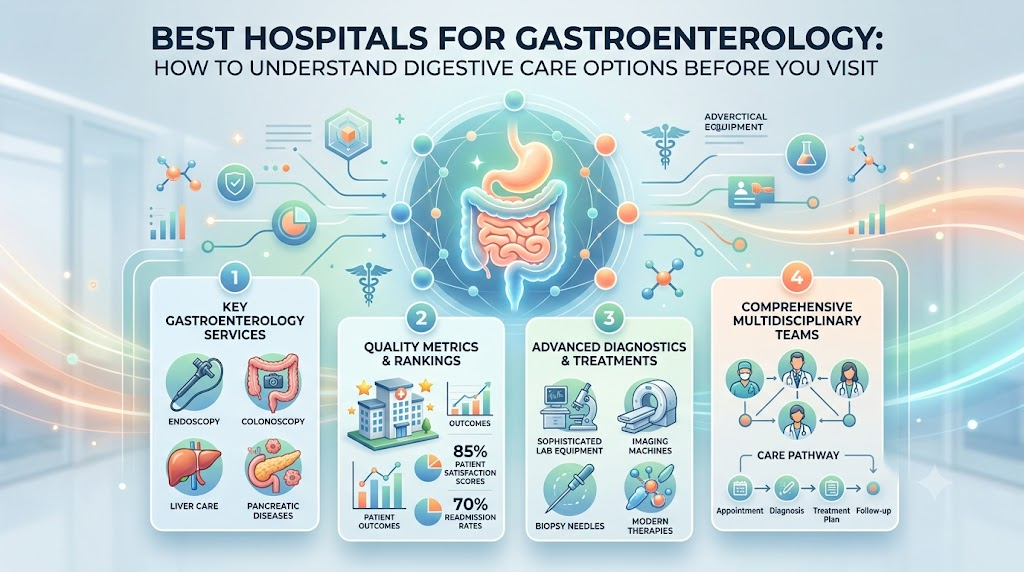
Hospital service pages can contain many medical terms. Reading every service as a separate option can create confusion. A better approach is to group services by purpose. First, look for specialist consultations. Next, check diagnostic services. Then review endoscopy and procedure services. After that, look for surgical support and follow-up care. This approach can show how different departments connect. For example, a hospital may list endoscopy, imaging, liver care, IBD services, and gastrointestinal surgery on separate pages. These services may still work within one broader digestive care pathway. Patients can also check whether the hospital has services related to their specific concern. The best hospitals for gastroenterology should not be judged only by the length of a service list. The usefulness of a service depends on the patient’s actual healthcare needs and medical advice.
Questions to Ask Before a Digestive Specialist Visit
Preparing questions can make a specialist visit easier to follow. Patients can ask what the main reason for the consultation is. They can ask which reports the doctor needs to review. They may also ask why a particular test is being considered. If a procedure is discussed, they can ask what it is meant to evaluate. Questions about results and follow-up can also help. Families may want to understand which department handles each part of care. These questions can be especially useful when several doctors are involved. A gastroenterologist can explain the medical side of the care plan. Patients can then use that information when reviewing hospital services. Good preparation does not mean deciding treatment before the appointment. It simply helps patients understand the discussion and remember important questions.
Finding the Best Hospitals for Gastroenterology
Finding the best hospitals for gastroenterology should begin with the services a patient may need. A hospital can have a large digestive department but still lack a particular service. Another hospital may offer a smaller service list that matches a specific care need. Patients can compare specialist access, diagnostic services, endoscopy, liver care, IBD services, and surgical support. They can also check whether different teams are available when complex care requires more than one specialty. The goal is not to create a personal ranking. Instead, patients can build a clear picture of available services. GastroHospitals.com provides information that can help people explore hospitals and digestive care areas. It brings attention to gastroenterology, liver care, endoscopy, pancreatic services, and gastrointestinal surgery. Patients should still discuss their individual needs with a qualified medical professional.
Table: What to Check in a Gastroenterology Hospital
| Factor to Check | What It Means | Why It Matters |
|---|---|---|
| Specialist access | Gastroenterology doctors are available | Helps patients find relevant specialist care |
| Diagnostic services | Tests and imaging support digestive evaluation | Different conditions may need different tests |
| Endoscopy services | The hospital provides digestive procedures | Some conditions require internal examination |
| Liver services | Liver-focused medical care is available | Useful for people needing liver evaluation |
| IBD services | Teams support inflammatory bowel conditions | IBD can require ongoing specialist care |
| Surgical support | Digestive surgeons are available | Some conditions may require surgical review |
| Follow-up care | Ongoing review is provided | Digestive care may continue after testing |
| Communication | Departments can share relevant information | Helps patients understand the care pathway |
Common Mistakes Patients Make
Patients can make simple mistakes when researching digestive hospitals. Mistake 1: Choosing from a long service list alone. A long list does not show whether every service fits a person’s needs. Mistake 2: Focusing only on equipment. Technology matters, but specialist care and communication also matter. Mistake 3: Ignoring older medical reports. Previous reports may help doctors understand the history. Mistake 4: Treating every digestive condition the same way. Different conditions can need very different care. Mistake 5: Searching only for surgery. Some patients may need medical or diagnostic care instead. Mistake 6: Assuming every hospital offers the same procedures. Services can vary between hospitals. Mistake 7: Using online information as a diagnosis. Medical websites cannot replace a clinical assessment. Mistake 8: Forgetting to ask about follow-up. Care may continue after a test or procedure. Mistake 9: Comparing hospital names without comparing services. Service details can be more useful for practical research. Mistake 10: Expecting one doctor to manage every digestive issue. Complex cases may involve several specialists.
A Simple Example
Imagine a fictional patient named Riya who has been advised to discuss ongoing digestive symptoms with a specialist. She searches for hospitals but finds many different service names. Instead of choosing based on a hospital name alone, she makes a simple list. She checks for a gastroenterologist, diagnostic services, endoscopy, liver support, and gastrointestinal surgery. She also notes whether the hospital explains its digestive services clearly. Riya uses GastroHospitals.com to explore hospital information and understand different areas of gastroenterology. She does not use the website to decide her diagnosis or treatment. During her medical visit, she asks the doctor why certain tests may be needed. This example shows how organized research can support a medical conversation. It does not show which hospital is medically right for any individual.
How GastroHospitals.com Can Help
GastroHospitals.com is designed to make digestive healthcare research easier to organize. It provides information about hospitals and services connected with gastroenterology, liver care, endoscopy, IBD, pancreas care, and gastrointestinal surgery. People can use the platform to understand what types of digestive services hospitals may offer. This can help families create a shortlist based on their information needs. The platform does not replace a doctor’s evaluation. It also does not promise a particular medical result. Instead, GastroHospitals.com works as a digestive-health discovery and education resource. Patients can use the information to prepare questions before speaking with a qualified gastroenterologist. Families can also use it when they want to understand different areas of digestive care in simple language. This makes hospital research more structured without turning online information into personal medical advice.
Frequently Asked Questions About Choosing Digestive Care
1. Can a hospital have strong gastroenterology services but still lack a service I need?
Yes. Hospital services can differ even when both hospitals have gastroenterology departments. One may offer advanced endoscopy, while another may focus on different services. The best hospitals for gastroenterology should therefore be compared by relevant services. Patients should confirm specific needs with a qualified doctor.
2. What does a referral tell me about the kind of digestive care I may need?
A referral can explain why a specialist review may be useful. It may mention symptoms, test findings, or a suspected area of concern. A gastroenterologist can review the referral and explain the next steps. Patients should not treat a referral as a final diagnosis or treatment plan.
3. Should I carry older scan and lab reports to a new specialist?
Older reports can give a doctor useful background information. They may help show previous findings and changes over time. This can support a clearer discussion about digestive disorders. Patients should follow the hospital’s instructions about records. A doctor can decide which reports are clinically relevant.
4. Why might a digestive specialist ask for another test?
A specialist may request another test when more information is needed. Different tests can answer different medical questions. For example, a colonoscopy procedure may provide information that another test cannot. The doctor can explain the purpose of each test and how the result may guide further care.
5. When can digestive care involve a surgeon and a gastroenterologist together?
Some conditions may require both medical and surgical expertise. The gastroenterologist may evaluate the digestive condition and discuss non-surgical options. A surgeon may assess whether an operation has a role. This can happen when gastrointestinal surgery becomes part of a wider digestive care plan.
6. Can liver care involve teams outside gastroenterology?
Yes. Liver disease treatment may involve several medical professionals depending on the condition. Care can include specialist assessment, laboratory work, imaging, procedures, or surgical review. The exact team depends on the clinical situation. A doctor can explain which specialists may need to participate in care.
7. What should I ask about communication after a colonoscopy?
Patients can ask when they will receive information about the findings. They can also ask which doctor will explain the results and what follow-up may involve. Communication can be an important part of the colonoscopy procedure. Specific result and follow-up questions should be discussed with the care team.
8. Does every hospital offering GERD treatment provide the same services?
No. Hospitals may offer different levels of evaluation and care. Some may provide specialist consultations and endoscopy, while others may have additional digestive services. GERD treatment can vary based on medical findings. Patients should check the available services and discuss suitable options with a qualified doctor.
9. Can IBD care continue for a long time?
Yes. IBD treatment may involve ongoing medical review because inflammatory bowel diseases can require continued management. Care may include specialist visits, tests, procedures, and sometimes surgical assessment. The care plan depends on the individual condition. A gastroenterologist can explain what ongoing monitoring may involve.
10. What can GastroHospitals.com help me understand before a hospital visit?
GastroHospitals.com can help users explore digestive hospitals and related services. It can provide a starting point for understanding gastroenterology treatments, specialist care, procedures, and hospital service areas. It does not provide a personal diagnosis. Patients should use a qualified gastroenterologist or doctor for individual medical decisions.
Final Thoughts
Finding digestive care becomes easier when hospital services are understood before a medical visit. Patients can look beyond hospital names and review specialist access, diagnostic services, procedures, liver care, IBD support, and surgery. The best hospitals for gastroenterology can differ based on the services a person may need. A gastroenterologist can explain symptoms, reports, tests, and treatment options during a clinical assessment. Online research should support that conversation, not replace it. GastroHospitals.com can help people explore digestive healthcare information in a more organized way. It can also help families prepare useful questions before contacting a hospital. Always discuss personal symptoms, test results, and treatment choices with a qualified gastroenterologist or doctor.
Leave a Reply